
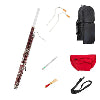
Unlock Your Melodic Potential with Premium Flutes: A Guide to Finding Your Musical Sound
The Art of Selection: How to Choose a Professional Flute and High-Performance Brass Instruments
The ultimate guide for advancing players—from the science of tone to the details of craftsmanship, helping you find the instrument that truly resonates with your artistic pursuit.
I. The Flute: The Silver Poet of the Orchestra
1.1 The Flute's Unique Role in Musical Texture
With its light, elegant tone, the flute holds a distinctive expressive position in orchestras, wind ensembles, and chamber groups. It can lead melodic lines with authority while blending seamlessly into the ensemble, adding layers and balance to the music.
In solo performance, the flute displays a dual character—both powerful and delicate. In ensemble settings, it serves as the bridge connecting strings and woodwinds. Understanding this role is the first step toward selecting the right instrument and achieving a refined sound.
Selection Insight: An exceptional flute is not merely a playing tool—it is the medium that transforms written notes into emotional storytelling.
1.2 Five Core Features of Professional Flutes
Feature Key Indicator Impact on Performance
Tone Consistency Clear, focused sound across all registers High notes without shrillness, low notes without muddiness
Precision Key Mechanism Responsive, comfortable action Effortless execution of rapid passages
Accurate Intonation Standardized intervals across registers Reduced tuning time, enhanced ensemble confidence
Quality Headjoint Design Material and cutting craftsmanship Determines tone color and projection
Superior Resonance Body material and wall thickness Enhances depth and richness of sound
Advancing Tip: A flute that combines these five elements offers better control, expression, and long-term satisfaction for the developing player.
1.3 Materials and Craftsmanship: The Science of Tone
Material Choice Determines Tone DNA:
Material | Tonal Character Best For Maintenance Notes
Sterling Silver (925) | Warm, round, rich in overtones | Classical, Romantic repertoire | Regular polishing to prevent oxidation |
14K/18K Gold | Luxurious, responsive, full-bodied | Solo performance, studio recording | Professional servicing required |
Platinum | Ultimate clarity, powerful projection | Large concert halls, contemporary works | Avoid contact with hard objects |
Craftsmanship Details Matter:
Precision pad sealing — Ensures airtightness, prevents air leaks
Ergonomic design — Comfortable for extended playing sessions
Refined surface finishing** — Affects airflow smoothness
✨ Core Principle: A meticulously crafted instrument not only sounds superior but also supports years of confident playing.
II. The Trigger Cornet: The Art of Precise Control
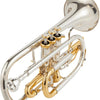
2.1 What Makes a Trigger Cornet Unique?
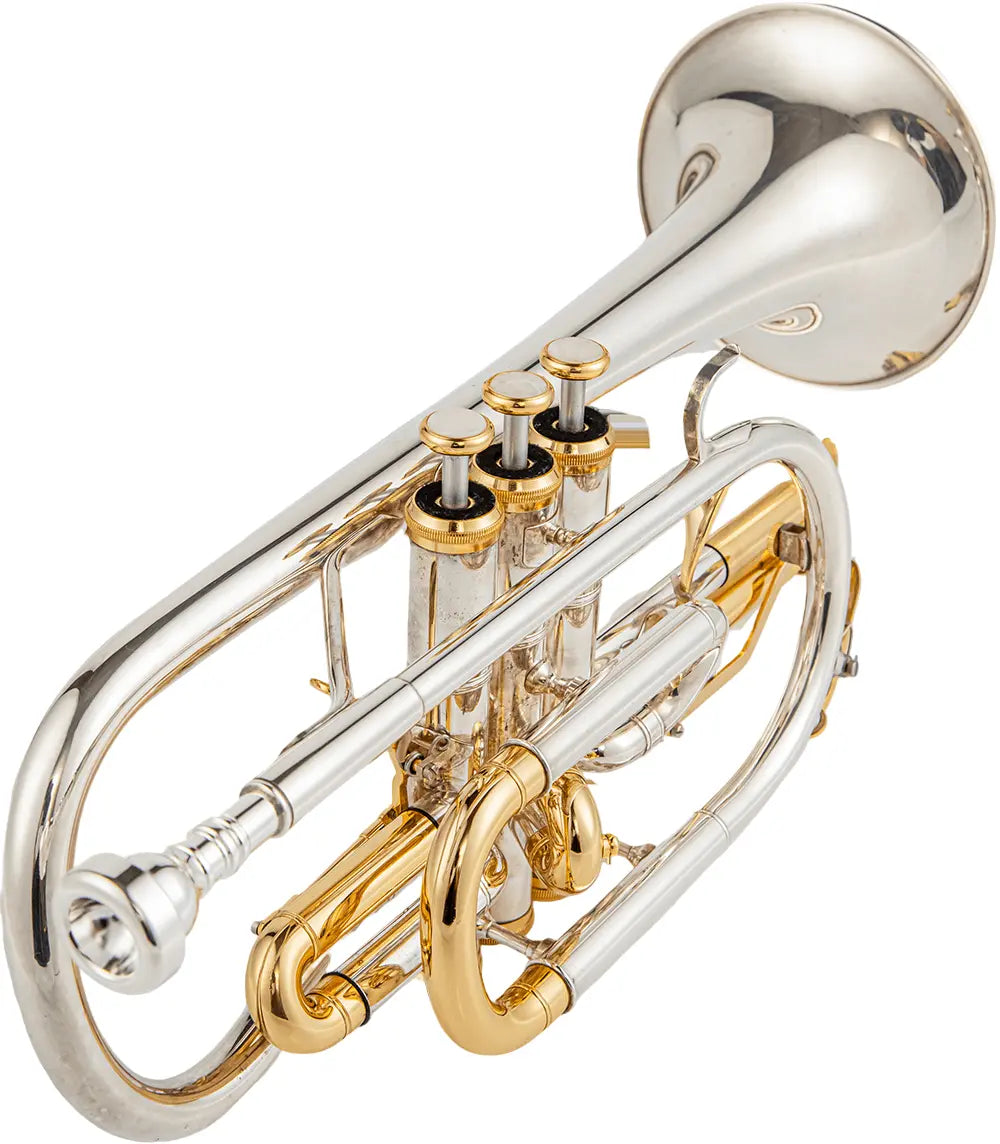
The trigger cornet stands distinctive in the brass family, its core innovation being the integrated trigger mechanism—allowing players to make real-time pitch adjustments during performance, significantly improving intonation accuracy.
Differences from Traditional Cornets:
- Real-time pitch correction capability
- More flexible tuning control
- Especially suited for complex harmonies and expressive passages
2.2 How the Trigger Mechanism Enhances Musical Expression**
Three Key Application Scenarios:
Scenario | Trigger Mechanism Advantage | Musical Result |
Jazz Improvisation | Rapid micro-adjustments of blue notes | More authentic "swing" feel |
Classical Ensemble** | Matching pitch with organ or piano | Purer harmonies |
Dynamic Variations** | Maintaining intonation stability in soft passages | More nuanced contrast between loud and soft |
🎺 Professional Assessment:** The trigger cornet provides an additional dimension of control for advanced musical performance, supporting more expressive phrasing and dynamic detail.
2.3 Trigger Cornet Selection Checklist**
Essential Evaluation Items:
Playing Level Match — Differences in beginner/intermediate/professional configurations
Key Selection** — Bb most common, A suitable for specific classical repertoire
Weight Balance** — Comfort during extended holding periods
Trigger Mechanism Quality** — Smoothness, rebound speed, positioning accuracy
Surface Finish** — Lacquer (warm) vs. silver-plated (bright)
After-Sales Support** — Warranty duration and return policies
🛒 In-Person Selection Advice:** Always test-play multiple instruments, comparing tone, feel, and response speed to find the partner that best matches your personal playing style.
III. The Piccolo Trumpet: The Tool of Brilliant Tone**
3.1 The Musical Territory of the Piccolo Trumpet**
Known for its bright upper register, the piccolo trumpet is central to classical repertoire—particularly Baroque period works. Bach's Brandenburg Concerto No. 2, Handel's oratorios—these classics shine because of the piccolo trumpet.
Modern Application Expansion:**
Jazz** — Provides unique tonal contrast
Studio Work** — Strong projection, easy to mix
Modern Ensembles** — Creates color layers with traditional trumpets
🎵 Versatility Value:** The piccolo trumpet successfully bridges traditional and contemporary styles, becoming a valuable asset for cross-genre players.---
3.2 Technical Features of High-End Piccolo Trumpets**
Design Element | Functional Description | Quality Indicator |
Precision Valve System** | Fast response, excellent airtightness | No lag, crisp rebound |
Quality Brass/Silver Material** | Affects brightness and projection | Uniform wall thickness, flawless finish |
Scientifically Designed Bell** | Even sound dispersion | Balanced volume across registers |
Four-Valve Configuration** | Extended low range to low A | Capable of playing lower notes |
Small Bore Design** | Focused, brilliant tone | Suitable for high-position rapid passages |
3.3 Piccolo Trumpet Practical Guide**
Entry Path:**
1. Progressive Approach** — Start with simpler repertoire, building intonation and endurance foundation
2. Strategic Use** — Selective deployment in ensemble for maximum musical impact
3. Tone Exploration** — Experiment with Harmon mutes and accessories to expand color palette
4. Breath Training** — Upper register requires stronger breath support and control
5. Master Study** — Listen to recordings by masters like Maurice André to establish tone concept
6. Thorough Warm-Up** — Systematic warm-up before performances to avoid lip fatigue
🎺 Advanced Mindset:** With thoughtful practice, the piccolo trumpet can add brilliance and sophistication to any performance.
IV. Ultimate Selection Framework: Finding Your Instrument Soulmate**
Decision Matrix**
| Evaluation Dimension | Flute | Trigger Cornet | Piccolo Trumpet |
Primary Consideration** | Headjoint and tone | Trigger mechanism quality | Valve precision |
Test-Play Focus** | Consistency across full range | Smoothness of pitch micro-adjustment | Stability in upper register |
Long-Term Investment** | Material upgrade potential | Mechanical durability | Resale value |
Hidden Costs** | Professional maintenance frequency | Trigger component repairs | Specialized accessory requirements |
Conclusion: The Instrument as Extension of Artistic Expression**
From the silver poetry of the flute to the precise control of the trigger cornet, to the brilliant tone of the piccolo trumpet—**every quality instrument is an amplifier of the player's artistic vision.**
Remember:** The most expensive is not necessarily the most suitable. The truly great instrument is the one that makes you forget technical limitations and immerse yourself fully in musical expression.
May this guide help you find that soul-resonating sound in the vast world of instruments.*
🎵 Ready to upgrade your instrument?** Explore our collection of professional flutes and brass instruments to begin your next musical journey.


Please upload banner from store admin blog pages